


How do you protect garden furniture through a British winter?
How do you protect garden furniture through a British winter?
Protecting garden furniture through British weather means covering it with a breathable, waterproof cover, cleaning it before storage, and moving cushions and softwood pieces indoors or into a shed when possible. Acacia and teak can handle rain if properly sealed and dried, but poly rattan and metal frames still need covers to stop water pooling in joints and fixings, where rust and rot start first.
British weather doesn't give garden furniture an easy ride. We go from a dry August to weeks of driving rain, then a cold snap, then damp again, sometimes within the same fortnight. Furniture that would last a decade in a drier climate can start looking tired after two winters here if it's left to fend for itself. The good news is that most damage is preventable once you understand what's actually attacking the material.
What actually damages garden furniture in the UK?
Three things do most of the harm: standing water, UV exposure, and freeze-thaw cycling. Standing water sits in the joints of dining sets and lounge sets, working its way into screw holes and seams. Left there over weeks, it swells wood fibres, corrodes fixings, and encourages mould on fabric cushions. UV exposure from even weak British sun fades and embrittles synthetic rattan and outdoor fabric over a season or two, making it crack under pressure it would normally shrug off. Freeze-thaw cycling, where water gets into tiny cracks in wood or resin, freezes, expands, and forces the crack wider, is the slow killer of anything left outside from November through March.
Does the type of material change how you should care for it?
Yes, and this is where a lot of people get it wrong by treating all garden furniture the same way.
Solid wood (acacia, teak, pine, eucalyptus): These woods contain natural oils that resist rot better than most timber, which is why they turn up in so many dining sets. Acacia and teak can be left outdoors for extended periods, but they still benefit from an annual oiling to replace the natural oils that rain washes out. Without it, the wood greys and can develop surface splits. A light sand and re-oil once a year, ideally in early autumn before the worst of the weather sets in, keeps the timber sealed.
Poly rattan and polypropylene: These synthetic weaves handle rain fine but are more vulnerable to UV fading and to becoming brittle in hard frost. A breathable cover is the main defence here. Avoid stacking heavy items on top of rattan furniture in storage, as the weave can distort under sustained pressure.
Metal frames (steel, aluminium, wrought iron): Aluminium resists rust and is low maintenance, but steel and iron frames need checking for chipped paint or powder coating, since any exposed metal will start corroding within weeks of being left wet. Touch up any nicks with a matching outdoor paint before winter.
Cushions and fabric: Fabric cushions are the most vulnerable item in any furniture set. Even water-resistant covers will eventually let damp through if left out for weeks on end, leading to mildew and a musty smell that's hard to shift. Bring cushions indoors, into a shed, or into a dedicated storage box whenever they're not in use for more than a day or two.
Should you cover furniture or bring it inside?
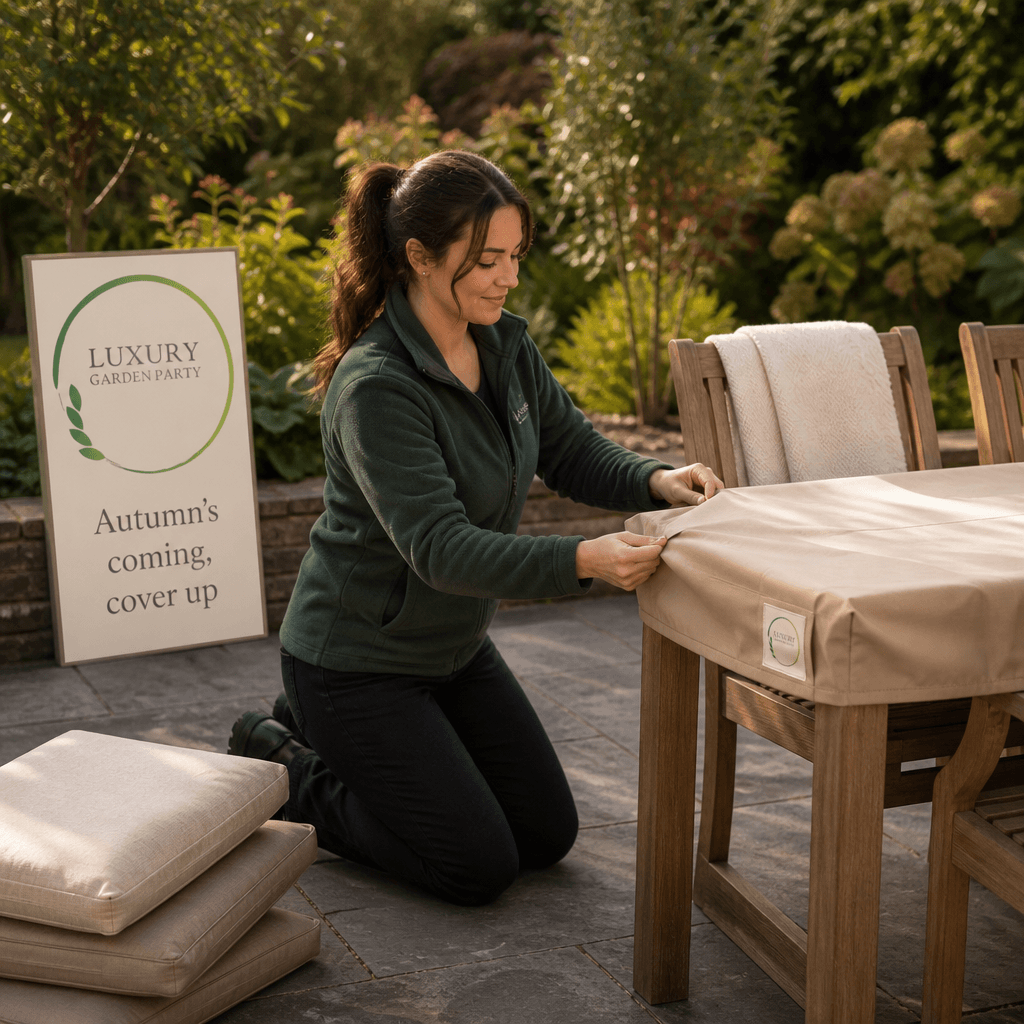
Both, depending on the piece and the space you have. A dedicated outdoor furniture cover, sized correctly and made from breathable fabric, is the minimum for anything staying outside over winter. Look for covers with ventilation points; a fully sealed cover traps condensation underneath and can cause more damp damage than leaving furniture uncovered. For anything with cushions or delicate joinery, moving it into a garage, shed, or covered storage box is worth the effort. If you're short on space, prioritise cushions and any wood or rattan pieces over aluminium frames, which cope with the cold far better.
When should you start winter preparation?
Late September through October is the ideal window, before the first hard frosts and before the heaviest autumn rain sets in. Waiting until December means you're likely already dealing with damp that's had weeks to work into joints and fabric. A basic seasonal routine looks like this:
- Clean furniture thoroughly with mild soap and water, then let it dry fully before covering or storing
- Oil solid wood pieces once cleaned and dry
- Check metal frames for paint damage and touch up as needed
- Store cushions somewhere dry, whether that's indoors, in a shed, or in a waterproof storage box
- Fit breathable covers on anything remaining outdoors
- Check covers periodically through winter for tears or pooling water on top
How do you bring furniture back after winter?
Come spring, give everything a proper inspection before use. Check wood for any new cracks or grey patches that need sanding and re-oiling. Check metal joints and fixings for rust that's crept in despite covers. Give fabric a wash if it's been in storage for months, since even sealed storage can leave a slightly musty smell. This is also the point where a lot of people notice a set has genuinely reached the end of its life and start looking at garden furniture replacements rather than repairs.
Common questions about garden furniture care
Can I leave rattan furniture outside all winter?
You can, but it will age faster. Poly rattan handles rain reasonably well but suffers under prolonged UV exposure and hard frost. A breathable cover extends its life considerably, and bringing it under cover entirely will keep it looking newer for longer.
Do I need to oil teak every year?
Not strictly, since teak's natural oils give it good rot resistance even untreated, and many owners let it weather to a silvery grey deliberately. If you want to keep the original colour, annual oiling in autumn is the way to do it.
What's the best way to store cushions over winter?
Dry them fully, then store them somewhere ventilated rather than sealed in plastic, which can trap moisture and cause mildew. A breathable storage box in a shed or garage works well; sealed bags do not.
Is it worth buying a furniture cover if I already have a pergola or awning?
Generally yes. A pergola or awning cuts down direct rain and sun but doesn't stop wind-driven rain or general damp, so a fitted cover still adds meaningful protection underneath.
If your current set has had a rough couple of winters and isn't bouncing back, it might be more sensible to replace than repair. We stock dining sets, lounge sets, and coffee sets in acacia, teak, and poly rattan, all backed by full manufacturer warranties, and our team can talk you through which material suits your garden and how much upkeep you're actually willing to do. Get in touch or browse the current range at Luxury Garden Party before the weather turns.